Pay attention, it’s not the government, it’s scammers! Some of you may have received text messages, social media messages, or even phone calls claiming they are a government agency or work for a certain government agency. Like I just got a text message earlier today telling me that the Kentucky District Court Traffic Division is summoning me by a judge named Michael Harlan, and my case number states that if I fail to appear or pay, it will result in immediate bench warrant issuance and license suspension, so I had better resolve it immediately. I also saw a similar post from someone else, but theirs was from the Kentucky State Police (KSP). If you received a text message or even a phone call like this, or any similar to these in the screenshots I took, which you will see below, DO NOT, I repeat, DO NOT click any link because if you did, they will be demanding that you pay them, which is one of their way to scam people.
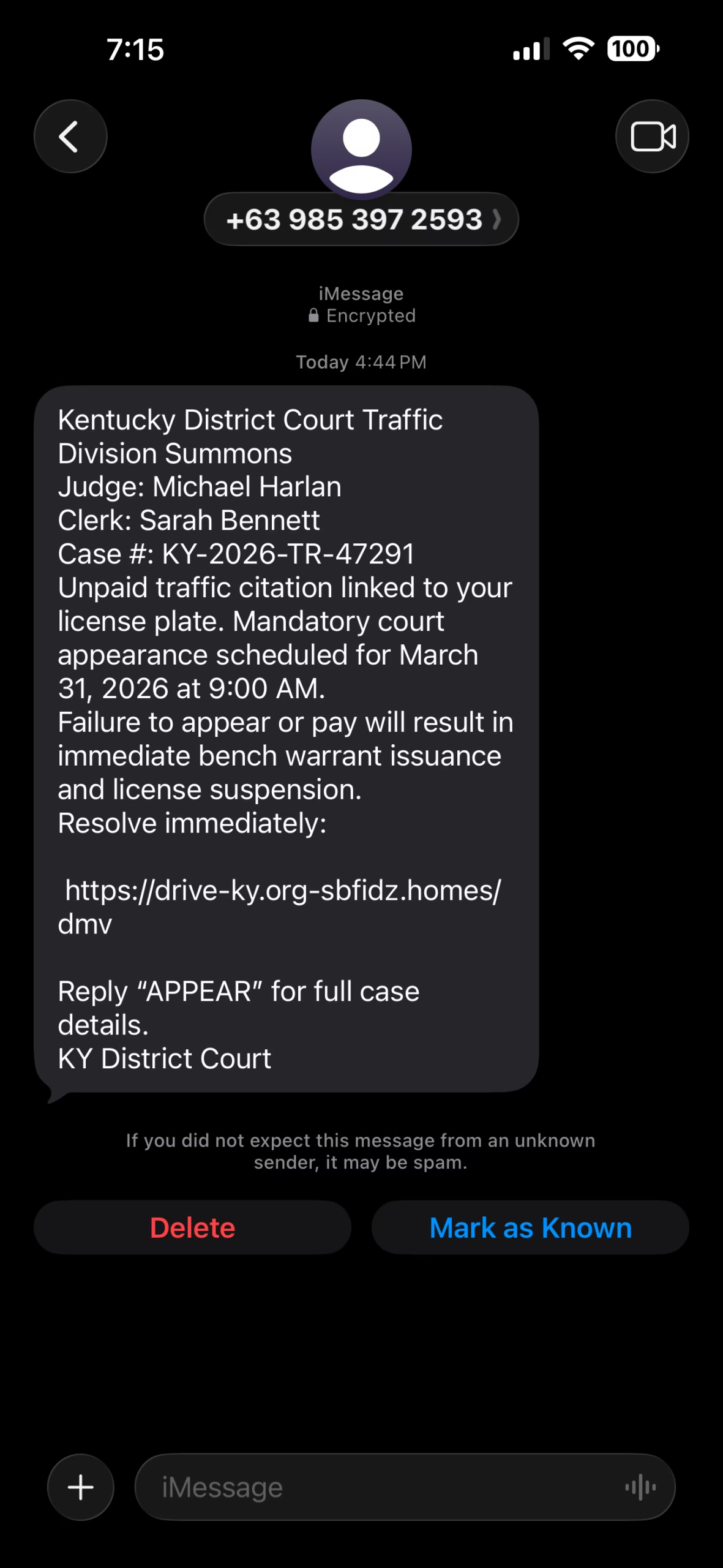
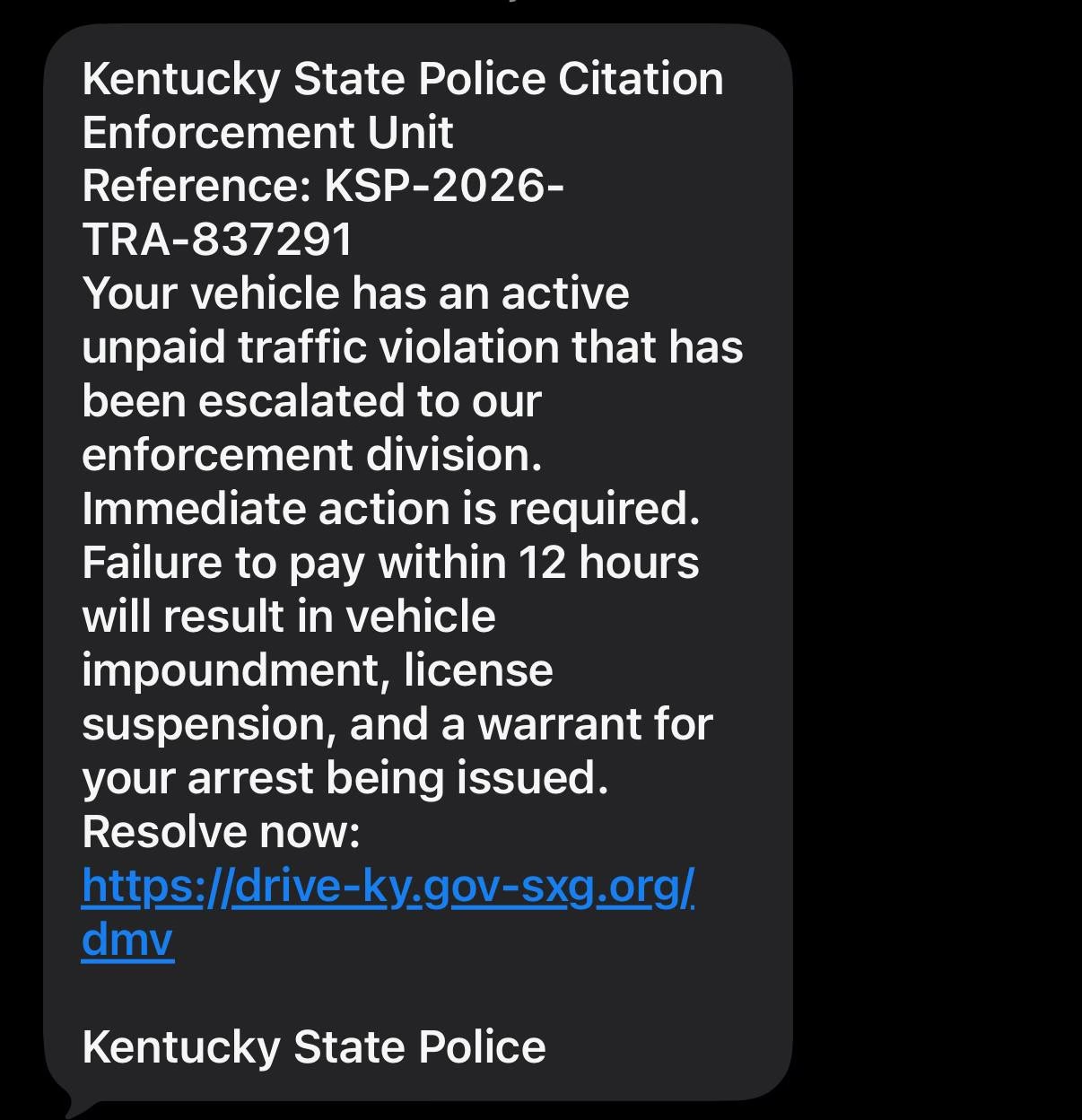
If anyone from the Kentucky District Court Traffic Division, or a state law enforcement summons you or requests that you appear at a court, a police station, or any government building, they do not text. They would either send you a document by mail or visit you in person (if they do, ask them to show you their ID). If they demand that you come out, don’t! Ask them to slip you the document showing a warranty with a judge’s signature under a door. This would be a good time for you to do a quick search for who is a judge in your district, county, city, or local area, and be familiar with their names, so that you can know if a signature from a judge on that document or warranty is actually a judge. If they do happen to call you, saying that they are a state district court or state law enforcement, DO NOT RESPOND, and HANG UP! Then call them yourself (not the same number that showed on your caller ID; look up their real number) to double-check; they can confirm whether it was them or scammers trying to intimidate you into paying up. Plus, real government websites would show something like “ky.gov”, not “ky.org” or even worse, drive-ky.org-sxg.org/dmv. Almost all government agencies do not use .org for a website address; the real one is .gov, like Kentucky.gov, Ky.gov, or drive.kentucky.gov, drive.ky.gov. Never with a .org at the end, or any other suffix such as .com, .net, .info, etc., but a .gov. Plus, pay close attention to make sure that the website address spells the state correctly.
That goes for the IRS, too: scammers will send text messages, make calls, or send a message on social media to many people, claiming they’re from the IRS and demanding that, if you do not pay whatever it is, they will call the police to have you sent to jail immediately. It’s not just the IRS; there are quite a few government agencies that claim to be, such as Medicare/Medicaid, the Social Security Administration, even the Federal Trade Commission itself, and a few more. Again and again, the government will not text, call, or message you on social media to demand payment. Or demanding that you purchase gift cards for them or send them some crypto so they would be counted. The government will usually send you documents by mail, but not by text message or a message on social media. The scammers are getting more creative every day, trying to come up with a strategy to scare us into opening our wallets and saying, “take them all,” because of our fear of being jailed when we really are not. They are sneaky snakes like that, and they try everything that they can to trap you.
So, please be careful. If you ever have a gut feeling that the text message, phone call, or a message on social media you received isn’t real, then your gut might be right! Got a text, a phone call, or a message on social media from any government agencies or such? Hang up/ignore them/delete them, look up their real number, then call them to confirm they were trying to reach you.
Here is useful information and resources to help you stay safe.
- When it’s not really the government calling by the Federal Trade Commission’s consumer advice.
- Recognizing Scams by the Federal Trade Commission’s Office of Inspector General.
- How To Avoid a Government Impersonation Scam by the Federal Trade Commission’s consumer advice.
- What To Know About Government Impersonation Scams by the Federal Trade Commission’s consumer advice.
Here is how you can avoid the scam, copied from What To Know About Government Impersonation Scams by the Federal Trade Commission’s consumer advice.
- Don’t wire money or use gift cards, cryptocurrency, or a payment app to pay someone who claims to be with the government. Scammers insist you can only pay these ways because it’s hard to track that money, and just as hard to get it back. They’ll take your money and disappear.
- Don’t give your financial or personal information to someone who calls, texts, emails, or messages you on social media and says they’re with the government. If you think a call or message could be real, stop. Hang up the phone and call the government agency directly at a number you know is correct. If the call is a robocall, don’t press any numbers. Pressing numbers could lead to more calls.
- Don’t trust your caller ID. Your caller ID might show the government agency’s real phone number or name — like “Social Security Administration.” But caller ID can be faked. It could be anyone calling from anywhere in the world.
- Don’t click on links in unexpected emails, texts, or social media messages. Scammers send emails and messages that look like they’re from a government agency but are designed to steal your money and personal information. Don’t click on any link, and don’t pass it on to others. Just delete the message.
If you think you have gotten a scam, the chance that they are, and you can report them by going to a website recommended by the Federal Trade Commission: ReportFraud.ftc.gov
Feel free to share this post to make sure everyone else is more aware of this. If you have been scammed before by someone claiming to be from or work for a government agency, and don’t mind sharing your story or experience, please leave a comment below! It is important to raise awareness about this not only through articles, letters, emails, news, and social media, but also through victims who share their stories or experiences with the public.
Joshua “Joshie” Sullivan.
Donate to or buy JoshiesWorld merch, and follow JoshiesWorld on social media to support JoshiesWorld. If you notice any incorrect information or website issues, contact JoshiesWorld.